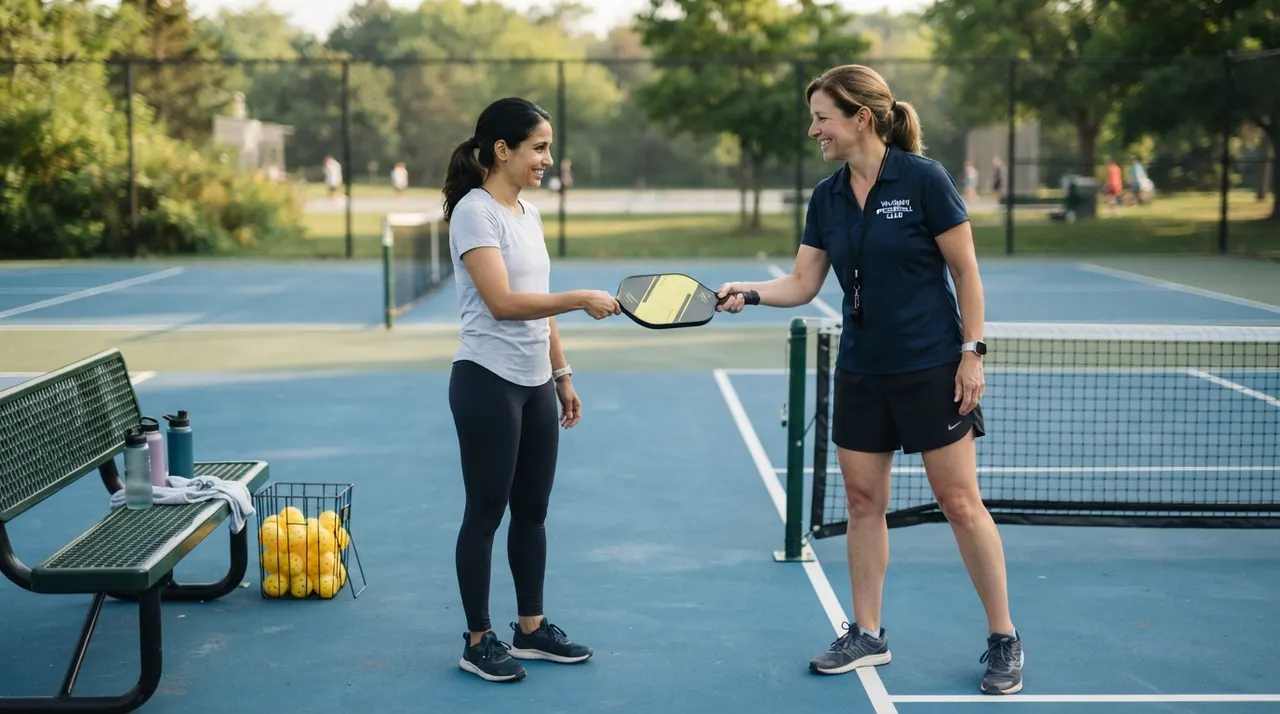
Nervous about your first pickleball lesson? Exactly what happens in a beginner session, what to bring, what not to worry about, and how fast you'll rally.
Booking your first pickleball lesson comes with a very common worry: that you'll be the worst one there, that you need gear you don't own, that you should somehow already know the rules. Let's retire all three right now. A beginner lesson assumes zero — zero experience, zero equipment, zero athletic background — and by the end of hour one, virtually every new student is serving and rallying. Here's exactly how the hour goes, so nothing about it surprises you.
What to bring (a short list)
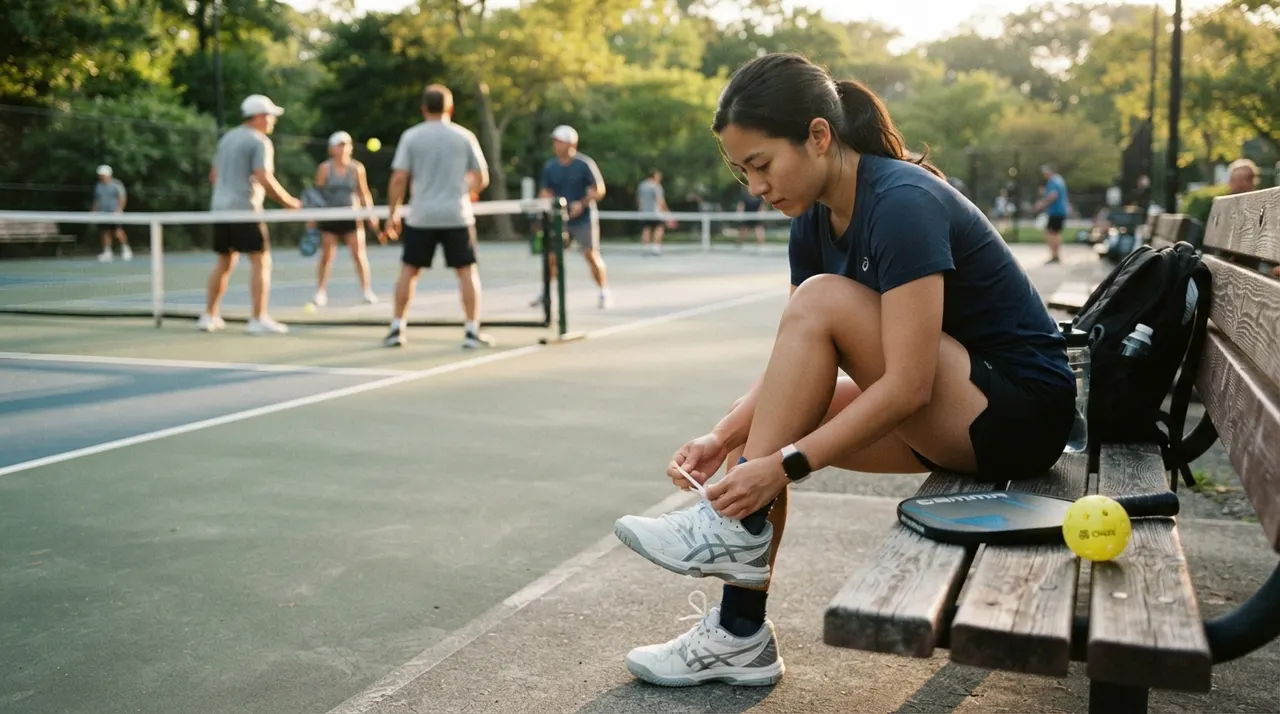
- Court or running shoes with some lateral support — the only genuinely important item.
- Water and weather-appropriate athletic clothes. Nothing special.
- That's it. Paddles and balls are provided at every lesson — trying a few loaner paddles is actually the smart way to start before buying anything.
- If you happen to own a paddle, bring it; a quick grip-and-condition check is part of a good first session.
How the hour actually goes
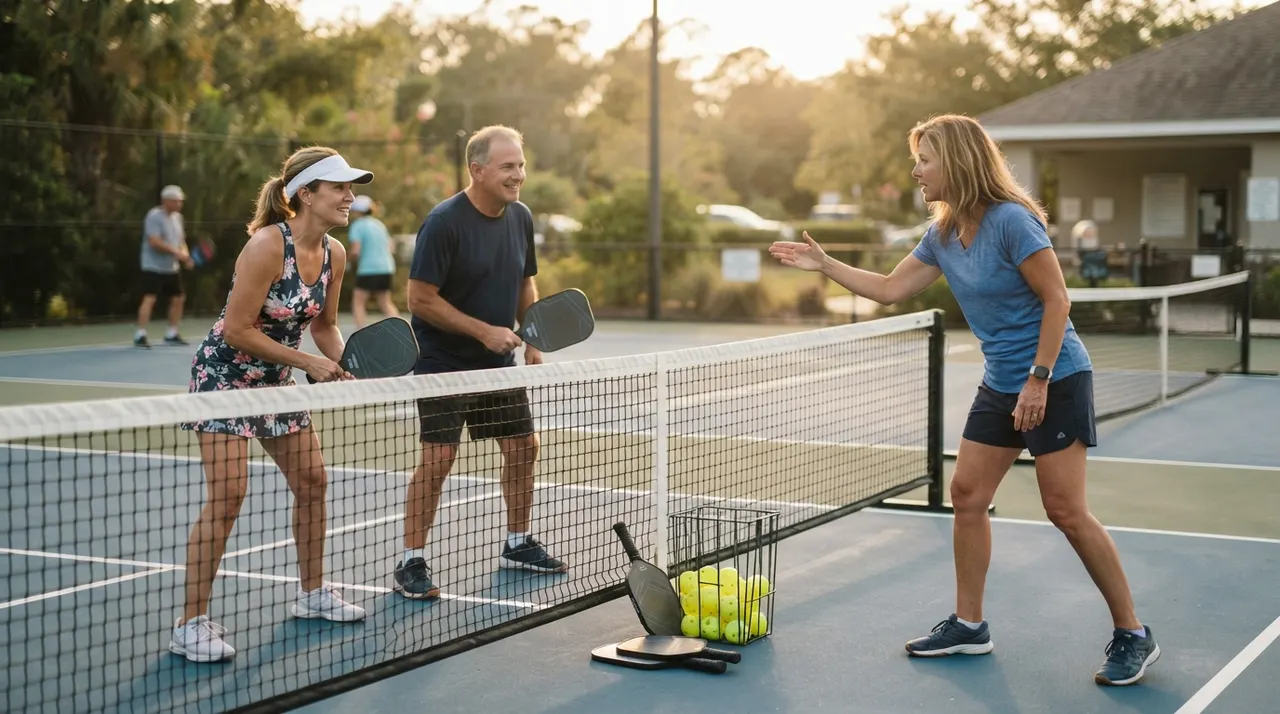
First ten minutes: talk and warm-up. Your coach asks what brought you in, whether you've played racquet sports, and any injuries to work around — then you hit easy balls back and forth so the coach can see how you move. There's no test and no drill-sergeant energy; a first lesson is an assessment wrapped in a friendly hit. Next, the essentials in the order you'll need them: how scoring works (in plain English — the basic rules are simpler than they sound), the underhand serve, the return, and the two-bounce rule that shapes every point's start.
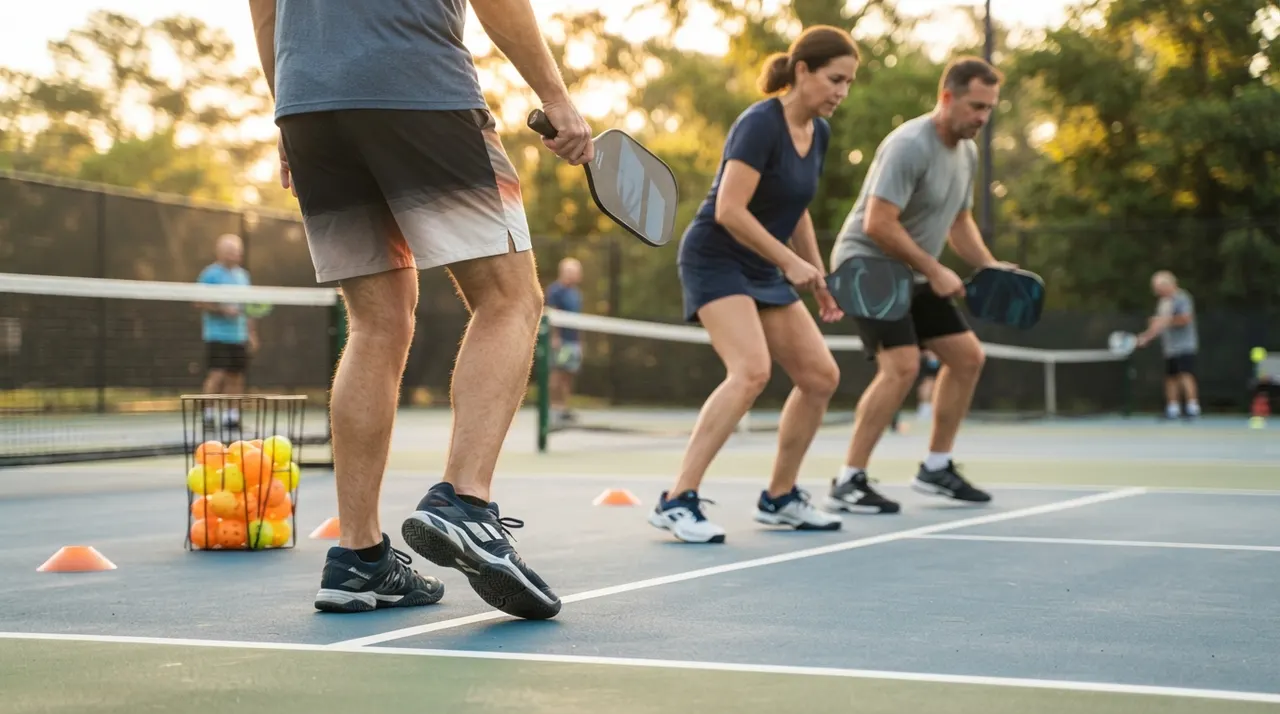
The middle of the session is guided rallying — the coach feeds balls at a pace you can handle, adjusting one thing at a time: where you stand, how you hold the paddle, keeping it up and ready between shots. Expect lots of repetition and zero scolding; missing is the mechanism, not a problem. Most first lessons end with a few real points, played slowly, so the rules click in context. You will lose track of the score. Everyone does. That's normal for weeks.
Nobody has ever been the embarrassing student in a beginner lesson. The coach has seen a thousand first serves go into the net — yours will not be memorable, and that's the good news.
Will I be able to keep up physically?
Almost certainly — this worry is common and almost always unfounded. A beginner lesson is not a fitness test: the court is small, the ball is slow, and a good coach feeds balls to where you are rather than making you chase. We routinely teach first-timers in their sixties and seventies alongside twenty-somethings, and the pacing adjusts to the player, not the other way around. Mention any knees, shoulders, or conditions at the start and the session works around them. Expect to be pleasantly tired afterward, not wrecked — and expect to be surprised by how much of the hour you spent laughing.
What you'll be able to do afterward
After one session: serve, return, keep a short rally going, and explain the scoring well enough to join a friendly game. After two or three: play real games without anyone slowing down for you. What a single lesson won't give you is consistency — that comes from repetition across weeks, which is why coaches talk about rhythm more than talent. A little practice between sessions (even ten minutes against a garage wall) doubles the speed of everything. A good coach ends the first session by telling you exactly that: here's what improved today, here's the one thing to practise, here's what we'd do next.
Choosing your starting format
If you'd rather learn beside other beginners — same pace, same nerves, plus people to play with afterward — a structured small group is the gentlest entry, and it's exactly what our beginner pickleball Learn-to-Play program was built for: four weeks, groups capped at four, $30 a session, everything provided. Want the fastest one-on-one start instead? A private first lesson gets you rallying quickest and carries our satisfaction guarantee. Either way, skim our plain-English rules explainer before you come if you like being prepared — and don't worry if you skip it, because covering the rules is the coach's job, not yours. Once you've started, the five most common beginner mistakes is the article to read next.
References
This article is general educational information, not professional, medical, or purchasing advice. External links are provided for reference; Vaughan Pickleball Tutor is not affiliated with and does not endorse any third-party brand or organization listed.