Women's pickleball shoes aren't smaller men's shoes. What matters — fit, lateral support, indoor vs outdoor soles — and how to choose the right pair.
If you're looking for the best pickleball shoes for women, the short answer is: any well-fitted women's court shoe that was built for lateral movement, not straight-line running. A great pair of court shoes is the best injury-prevention money you can spend in this sport — and for women players specifically, a shoe built on a women's last, not a shrunken men's one, makes a real difference in fit, comfort, and safety on court. Here's a practical, no-brand-hype guide to choosing the right pair, whether you're lacing up for your first game or replacing a worn-out pair after a year of play.
Why women's court shoes are actually different
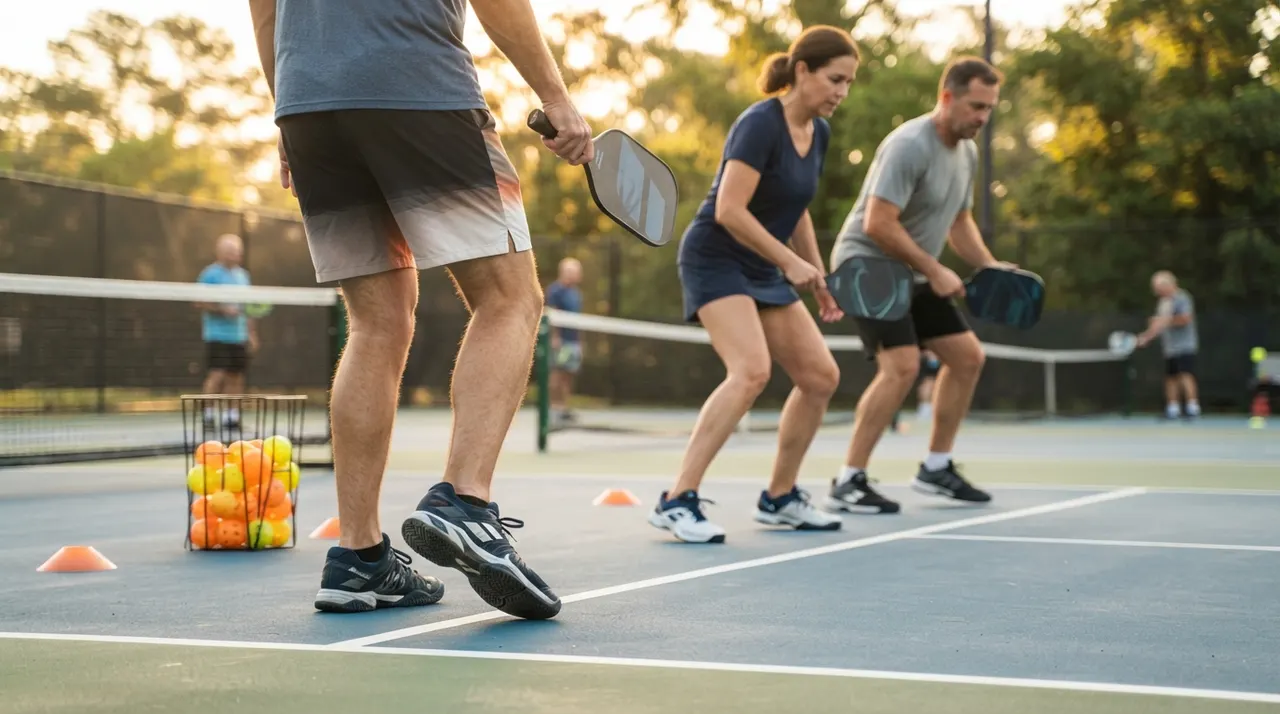
Women's pickleball shoes aren't simply men's shoes in smaller sizes. They're typically built on a narrower heel and a slightly higher instep, with cushioning tuned for a lighter average frame. That matters in pickleball because the sport is all lateral movement — a heel that doesn't lock in lets your foot slide on quick cuts, which is both slower and a rolled-ankle risk. Women's feet also tend to be narrower through the heel relative to the forefoot, so a proper women's last hugs the back of your foot while leaving room at the toes. Get a shoe that fits your foot shape and everything downstream — stability, confidence, speed to the kitchen line — improves.
Key features women should prioritize
Not every court shoe is created equal, and women players benefit from paying attention to a few specific features. These are the things we tell every student to look for before they spend a dollar.
- Narrower heel cup — women's feet are proportionally narrower at the heel than men's. A snug heel counter eliminates the internal sliding that causes blisters and rolled ankles on quick direction changes. If your heel lifts when you shuffle sideways, the shoe doesn't fit.
- Arch support that matches your foot — women are more prone to overpronation (the arch collapsing inward), and a shoe with structured arch support or a removable insole you can swap for a custom orthotic makes a measurable difference in comfort over a two-hour session.
- Lighter overall weight — women's court shoes typically run 8 to 11 ounces, compared to 10 to 14 for men's. A lighter shoe means less fatigue in your legs late in a long open-play session, without sacrificing stability as long as the lateral structure is solid.
- Lateral stability — a low, stable, wide outsole platform that resists rolling when you push off sideways. This is the single most important safety feature in any court shoe, and it matters more than cushioning, brand, or price.
- A reinforced toe cap — the split-step that anchors good pickleball footwork drags the toe of your dominant foot across the court surface hundreds of times per session. A shoe without toe reinforcement wears through in weeks.
Indoor vs outdoor court shoes for women
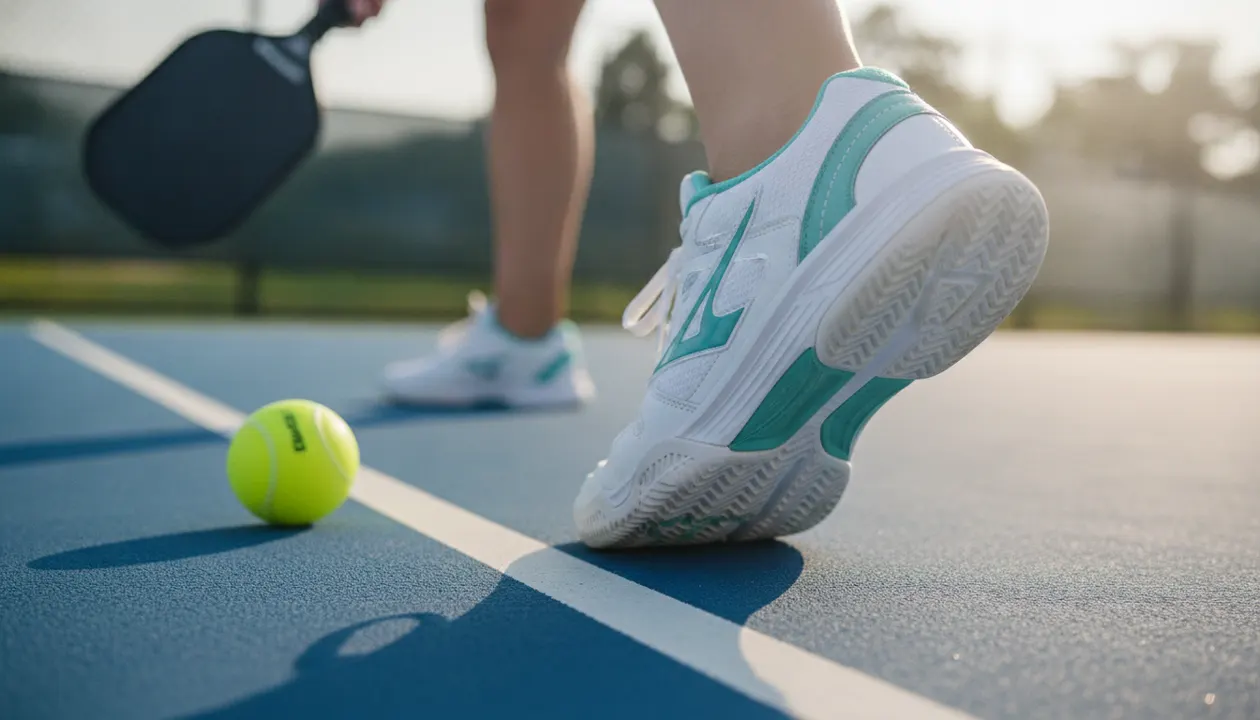
Where you play in Vaughan should decide the sole — and for women players who play year-round, this matters more than almost any other spec. Indoor court shoes (volleyball or squash style) use a soft gum sole for grip on gym floors; that sole grips beautifully on a clean hardwood or sport court surface but wears out in weeks on outdoor asphalt. Outdoor play needs a harder, more durable outsole — an outdoor tennis or pickleball shoe with a herringbone or modified herringbone tread pattern that can handle concrete and rough surfaces without disintegrating.
If you play both surfaces — indoors in winter at a Vaughan club or community centre, outdoors in summer at courts like York Hill or Le Parc — a good women's tennis shoe is the most versatile single pair. Tennis shoes are designed for hard courts with exactly the lateral demands pickleball shares, and most handle the transition between indoor and outdoor well enough for recreational play. That said, if you play three or more times a week, owning one indoor pair and one outdoor pair will save money in the long run because each pair lasts roughly twice as long when it stays on its intended surface.
- Indoor only (gym floor, sport court): a women's volleyball shoe or indoor court shoe with a soft gum non-marking sole. Lightweight and grippy.
- Outdoor only (asphalt, concrete): a women's tennis or pickleball shoe with a harder, abrasion-resistant outsole. Heavier but far more durable.
- Both surfaces: a women's all-court tennis shoe — the best single-pair compromise for year-round Vaughan play.
What to avoid: shoes that don't belong on a pickleball court
This is the section we wish every new player read before their first game. The shoes in your closet that feel comfortable for everyday life are almost never the right shoes for pickleball, and some are actively dangerous. Here's what to leave at home.
- Running shoes — the number one offender. Built for straight-line forward motion with a tall, cushioned, narrow heel that is engineered to roll your weight forward. The moment you plant and cut sideways — which is every single point in pickleball — that heel rolls outward and takes your ankle with it. This is the most common cause of the preventable ankle sprains we see in new players.
- Fashion sneakers and lifestyle shoes — flat-soled sneakers might look stable, but they have zero lateral reinforcement and their thin, smooth outsoles slide on dusty court surfaces. They offer no toe protection and no heel lockdown.
- Trail runners and hiking shoes — heavy, grippy in the wrong direction, and the aggressive lugged outsole can damage indoor court floors and mark outdoor surfaces. The stiff ankle collar restricts the quick pivots pickleball demands.
- Minimalist or barefoot-style shoes — too thin and too flexible to absorb the repeated impact of split steps and lunges on a hard court. No lateral support whatsoever.
- Old, worn-out court shoes — even a proper court shoe becomes a liability once the tread flattens and the lateral sidewall softens. If the outsole is smooth or the shoe leans inward when you set it on a flat surface, it's time for a new pair.
You don't need a pickleball-specific shoe to play well — a properly fitted women's tennis or court shoe protects you far better than any running shoe, at any price. The shoe type matters; the brand doesn't.
Getting the fit right
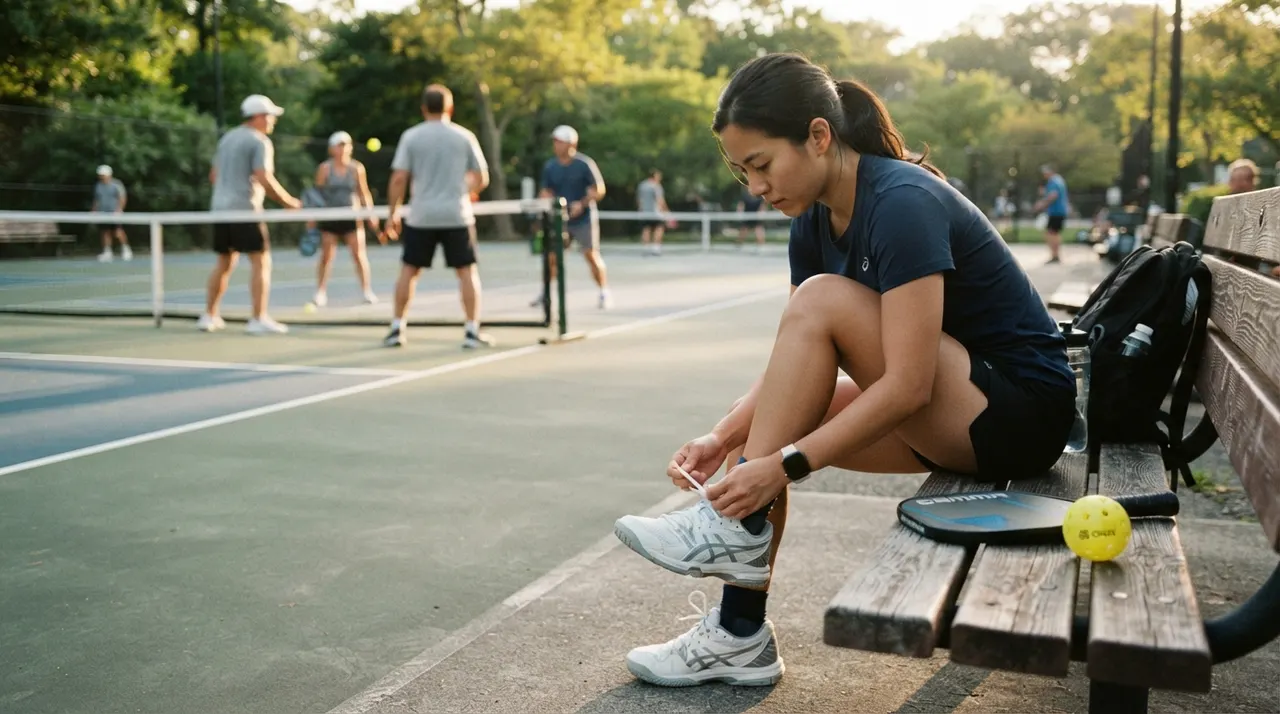
Try shoes on later in the day when your feet are at their largest, wearing the socks you actually play in. You want a snug midfoot with a thumb's width of room at the toe — court shoes should feel locked-in, not roomy, because side-to-side movement needs your foot anchored. If you play in orthotics, bring them; they change the fit and the shoe's removable insole should make space for them. One detail women often overlook: if a shoe feels great standing still but your heel lifts when you do a lateral shuffle in the store, it will fail you on court. The shuffle test takes five seconds and saves a return trip.
Width matters as much as length. Some women have wider forefeet that need a standard or wide option, while others have narrow feet that swim in anything without a slim fit. Most major court-shoe brands now offer women's-specific wide sizes — ask for them if your forefoot feels pinched in a standard width, because jamming into a narrow shoe causes toe pain and black toenails over time.
Get proper footwear before your first lesson
If you're new to the game — especially if you're starting pickleball after 55 — sorting your shoes before you step on court is the single most impactful thing you can do for injury prevention. We see it constantly: a player borrows a paddle (fine), grabs a ball (fine), and wears their walking shoes (not fine). One aggressive kitchen exchange later, an ankle rolls. It's preventable, and it's the one piece of prep we insist on. The paddle and balls we provide; the shoes are your job.
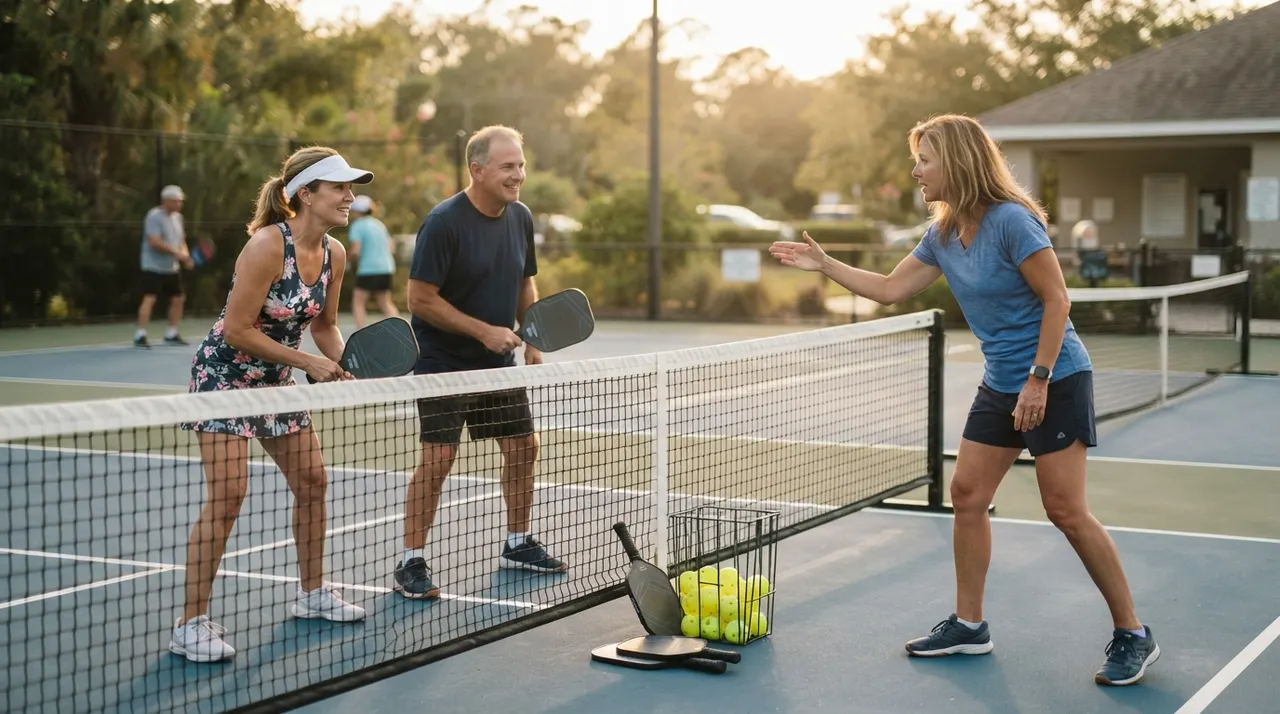
Once the shoes are sorted, the footwork side of the equation is what coaching handles. We build safe, efficient lateral movement into every session — it's baked into week one of the beginner Learn-to-Play program and it's one of the first things we assess in a private lesson. Good shoes plus good footwork is the combination that keeps you playing for years instead of nursing an avoidable injury after month one.
Women's pickleball shoes FAQ
What are the best pickleball shoes for women?
Any women's-specific court shoe with strong lateral support, a non-marking outsole, and a secure heel fit. Women's tennis shoes, pickleball shoes, and indoor court shoes (volleyball, squash) all work — the key is that the shoe was designed for side-to-side movement, not forward running. Match the sole type (indoor gum vs outdoor herringbone) to the surface you play on most.
Do women need different pickleball shoes than men?
Not a different type, but a different fit. Women's court shoes are built on a last shaped for a narrower heel, a higher instep, and a wider forefoot relative to heel width — proportions that differ from men's feet. A women's-specific shoe locks the heel in and prevents internal sliding on lateral cuts. If a unisex or men's shoe fits your foot well, it works fine mechanically, but most women get a better, safer fit from a women's model.
Are running shoes OK for pickleball?
No — and this is the most common footwear mistake we see. Running shoes are built for straight-line forward motion with a tall, cushioned heel that rolls your ankle outward the moment you cut sideways. Pickleball is almost entirely lateral movement, quick stops, and pivots. Any proper court shoe — tennis, pickleball, squash, volleyball — is dramatically safer. Our full shoe guide explains the difference in detail.
What should I look for in women's pickleball shoes?
Five things, in order of importance: lateral stability (a low, wide base that resists rolling), a secure heel cup that doesn't lift when you shuffle, a non-marking court outsole matched to your surface, a reinforced toe cap, and arch support or a removable insole you can replace with orthotics. After that, fit and comfort — try them on with your playing socks and do a lateral shuffle test in the store.
Can I use tennis shoes for pickleball?
Yes — tennis shoes are one of the best options for pickleball because the movement patterns are nearly identical: lateral cuts, split steps, quick direction changes. A women's tennis shoe is often the most versatile single pair, especially if you play both indoors and outdoors in Vaughan.
How often should I replace my pickleball shoes?
On outdoor asphalt, expect roughly 45 to 60 hours of play before the outsole smooths out and the lateral support softens. Indoors they last longer. Replace them when the tread is flat or the shoe leans inward on a level surface — worn shoes quietly bring back the ankle-roll risk you bought them to prevent.
The right shoes give you a stable base — good footwork does the rest. Whether you're booking a private lesson to fast-track your game or joining our beginner Learn-to-Play program to start from zero, proper footwear is the one thing we ask you to sort before you arrive. We provide the paddles, the balls, and the coaching. You bring the court shoes — and we'll build the footwork that makes them matter.
References
- Hospital for Special Surgery — Pickleball Injury Prevention Tips (court shoes vs running shoes)
- Cleveland Clinic — Is Pickleball Good Exercise? (lateral movement & injury risk)
- Cureus / NIH PMC — Treating Geriatric Sports Injury Among Pickleball Players (ankle sprains)
This article is general educational information, not professional, medical, or purchasing advice. External links are provided for reference; Vaughan Pickleball Tutor is not affiliated with and does not endorse any third-party brand or organization listed.