Do you need pickleball shoes? Are running shoes OK? What makes a good pickleball shoe? A coach's honest guide to choosing the right court shoes for indoor and outdoor play — plus our top pick.
If you take one piece of gear advice before your first lesson, make it this one: don't play pickleball in running shoes. It's the single most common mistake we see, and it's behind a lot of preventable rolled ankles and sore knees. Here's why, and how to pick the right pair.
Why running shoes are the wrong choice
Running shoes are built for one thing: moving forward in a straight line, with a tall, cushioned heel that pushes you along. Pickleball is the opposite — constant side-to-side movement, quick stops, and pivots at the kitchen line. That raised, soft heel becomes a liability the moment you plant and change direction, rolling your ankle outward. Court shoes sit lower and wider for exactly this reason: lateral stability.
What to look for in a court shoe
- Lateral support — a low-to-the-ground, stable base that resists rolling when you push off sideways.
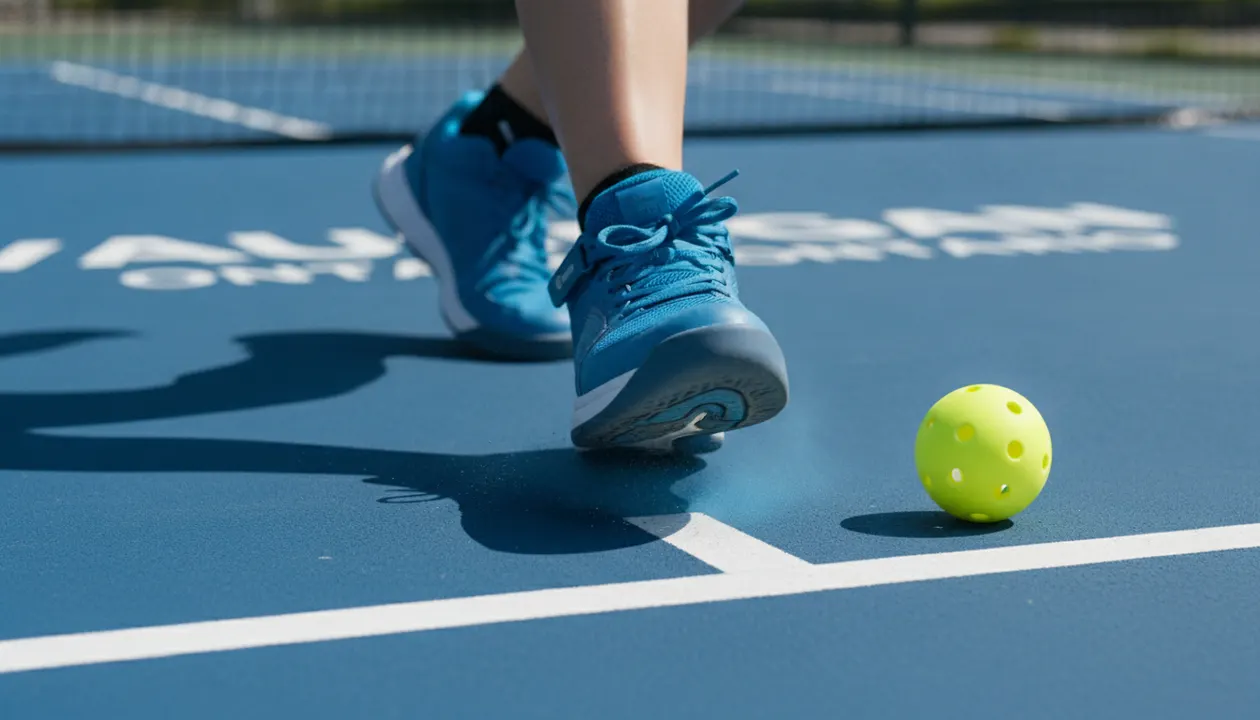
- A non-marking gum or herringbone outsole designed for court grip, not road tread.
- A reinforced toe — all those split-step stops chew through soft running uppers fast.
- A snug, locked-in midfoot so your foot doesn't slide inside the shoe on quick cuts.
Indoor vs outdoor soles
The surface changes what you want underfoot. Indoor court shoes (think volleyball or squash shoes) use a softer gum sole for grip on gym floors. Outdoor play on asphalt or concrete needs a harder, more durable outsole — an outdoor tennis or pickleball shoe — because a soft indoor sole wears out in weeks outside. Dedicated tennis and pickleball shoes work well for both; a true indoor shoe should stay indoors.
You don't need to spend a fortune — any proper tennis, squash, or pickleball court shoe will protect you far better than the priciest running shoe.
Do you need pickleball-specific shoes?
Not necessarily. Pickleball-specific shoes exist and are excellent, but a good tennis shoe does the same job — the movement patterns are nearly identical. If you already own court shoes for another racquet sport, you're set. If you're buying fresh, tennis or pickleball shoes are the safe pick, and matching indoor vs outdoor to where you play in Vaughan will make them last.
Our top pick right now: Skechers Viper Court Reload (Hands Free Slip-ins)
If you'd rather skip the comparison shopping and just buy a solid pair, our current top pick is the Skechers Viper Court Reload — Hands Free Slip-ins. It's a dedicated pickleball court shoe that checks every box above: a low, stable base and a non-marking outsole built for lateral cuts and quick stops, a supportive Arch Fit insole, and enough cushioning to hold up to hours at the kitchen line. The standout is the hands-free slip-in heel — you step straight in without bending down to tie laces, which players with limited mobility and a lot of our players over 55 genuinely love. It's comfortable, sensibly priced, and protects your ankles and knees far better than any running shoe.
Best pickleball shoes for intermediate players
If you've been playing for a few months and you're past the beginner stage, your shoes matter more — not less. Intermediate players move faster, hit harder split steps, and spend more time on court per session. That extra intensity punishes a worn or marginal shoe. At this level, look for a shoe with a firmer lateral cage (your cuts are quicker now), a durable outsole that can handle 3–4 sessions a week, and enough cushioning to absorb the cumulative impact of longer matches. The Skechers Viper Court Reload above is still excellent; if you want a step up, a mid-tier tennis shoe from ASICS (Gel-Renma or Gel-Dedicate) or New Balance (Fresh Foam Lav v2) gives you more structure and durability without the price tag of a pro-level shoe. The key at the intermediate level is fit and lateral stability — not brand.
Best pickleball shoes to prevent injury
The single most important thing a shoe can do in pickleball is keep your ankle from rolling. Rolled ankles are the most common preventable injury in the sport, and they almost always happen to players wearing running shoes or worn-out court shoes. For injury prevention specifically, prioritize: a low, wide base (not a tall heel), a firm lateral sidewall that resists roll-over, a non-slip outsole that grips on quick stops, and a snug heel counter that locks your foot in place. Replace your shoes once the tread flattens or the lateral support feels soft — worn shoes quietly bring back the roll risk. If you have a history of ankle issues, a shoe with a slightly higher collar (like the ASICS Gel-Resolution line) adds a small margin of extra support.
Frequently asked questions about pickleball shoes
What type of shoes are best for pickleball?
Court shoes — a tennis, pickleball, or squash/volleyball shoe. They share the low, wide, laterally stable base pickleball needs. Any of those will protect you; running shoes will not.
What makes a good pickleball shoe?
Four things: lateral support (a low, stable base that resists rolling), a non-marking court outsole for grip, a reinforced toe that survives split-step stops, and a snug midfoot that locks your foot in place on quick cuts.
Do you need pickleball-specific shoes?
No. Pickleball-specific shoes are excellent, but a good tennis shoe does the same job because the movement patterns are nearly identical. Buy pickleball-specific if you want the newest court features — like the slip-in Skechers above — otherwise any proper court shoe works.
Can you wear running shoes for pickleball?
You can, but you shouldn't. Running shoes are built for forward motion with a tall, soft heel that rolls your ankle the moment you plant and cut sideways — the exact movement pickleball is built on. This is the most common cause of the preventable ankle injuries we see.
What's the difference between pickleball shoes and running shoes?
Running shoes are tall, cushioned, and tuned for straight-line forward motion. Court shoes sit lower and wider for side-to-side stability, use a non-marking grippy outsole instead of road tread, and reinforce the toe for stops and pivots.
Are pickleball shoes worth it?
Yes — mostly for injury prevention and durability. The right court shoe dramatically lowers your risk of a rolled ankle and lasts far longer on court than a running shoe, which wears out fast under lateral load. You don't need the priciest pair; you need the right type.
Do pickleball shoes prevent injury?
They lower your risk. Most beginner pickleball injuries are ankle and knee tweaks from cutting in unstable footwear. A low, stable court shoe won't make you injury-proof, but paired with good footwork it removes the biggest avoidable cause.
Do pickleball shoes need ankle support?
A high collar helps a little, but stability matters far more than height. A shoe that sits low and wide keeps your ankle from rolling in the first place, which beats a tall collar trying to catch it after. Prioritise a stable base over a high-top look.
How should pickleball shoes fit?
Snug through the midfoot and heel so your foot doesn't slide on quick cuts, with about a thumb's width at the toe. Try them on with your playing socks. A shoe that slips inside on lateral movement is both slower and more likely to cause a blister or a roll.
How long do pickleball shoes last?
Outdoors on asphalt, expect roughly 45–60 hours of play before the outsole smooths out; indoors on gym floors they last considerably longer. Replace them once the tread flattens or the lateral support feels soft — worn shoes quietly bring back the roll risk.
What are the best pickleball shoes for beginners?
Don't overthink it — any proper court shoe protects you, so buy for fit and comfort over brand. The slip-in Skechers Viper Court Reload above is an easy, forgiving first pair. If you already own tennis shoes, start with those and upgrade later.
What are the best pickleball shoes for women?
The same criteria apply, but fit and volume differ — see our companion guide to the best pickleball shoes for women for specific picks.
Good footwork is the other half of staying injury-free — the right shoes only help if you're moving well. We build safe, efficient movement into every session, from the beginner Learn-to-Play program to private lessons. Get the shoes right, and we'll handle the footwork.
References
- Hospital for Special Surgery — Pickleball Injury Prevention Tips (why court shoes, not running shoes)
- Journal of Foot & Ankle Surgery / PubMed — Pickleball- and Paddleball-Related Lower Extremity Injuries
- AOAO — Rising Orthopedic Injuries in Pickleball: A 10-Year National Study
- Cleveland Clinic — Is Pickleball Good Exercise? (lateral movement demands)
This article is general educational information, not professional, medical, or purchasing advice. External links are provided for reference; Vaughan Pickleball Tutor is not affiliated with and does not endorse any third-party brand or organization listed.